DARPA: read 10^6 neurons, write 10^5 neurons

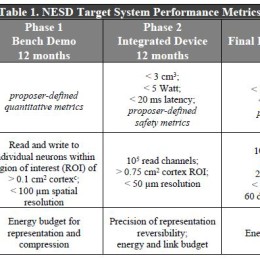
DARPA wants a dream neural interface. They can wait 4 years, but they want a complete plan now (abstracts due Feb 25, full proposals April 14).

This is a direct quote from the announcement for the Neural…
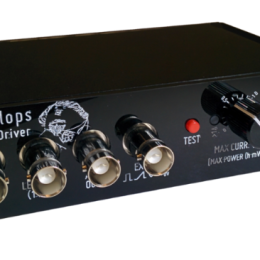


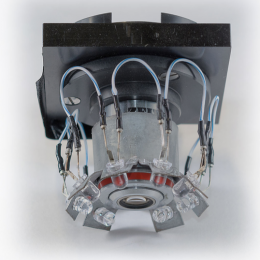
Open Ephys’ Cyclops LED driver

We covered Open Ephys back in 2013. They have well-developed devices for extracellular electrophysiology, and have some work on intracellular electrophysiology as well. Check out the Cyclops LED driver too. It continues…


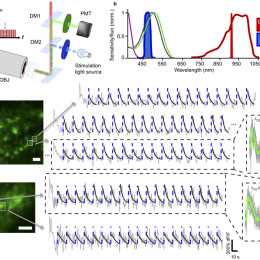
2-photon calcium imaging of the mouse retina in vivo

Bar-Noam et al. 2016 (Shy Shoham’s lab) figured out how to image the mouse retina with 2-photon microscopy in vivo.


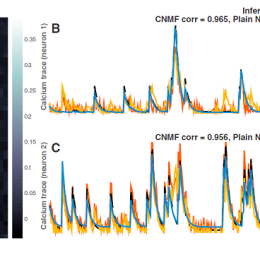
Constrained non-negative matrix factorization for calcium imaging data analysis

I tweeted about this last fall. This is the best algorithm I’ve seen for segmenting and extracting time course from calcium imaging data. Eftychios Pnevmatikakis developed the code in Liam Paninski’s lab….


New category of posts: papers

In the past, Labrigger has only rarely posted about relevant papers. That ends today. Now there’s a new post category for papers, and it’ll be used to highlight publications that are of potential interest to…


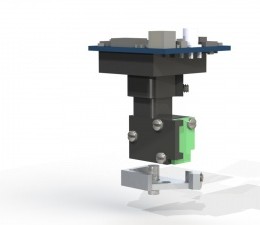
Open source head-mounted calcium imaging

The UCLA Miniscope project is an NIH BRAIN Initiative-funded project to open source head-mounted calcium imaging devices. Their web site is online now. They’ll be releasing all of the information needed for making these devices yourself, including data analysis. They’ll also…


Ufora – easy parallel computing in Python

It’s still early days, but this looks impressively good. Ufora might be one of the easiest-to-try ways to use parallel computing. With just a couple of lines of code, you can run…


CANDLE-J for denoising 2p data

Collaborative Approach for eNhanced Denoising under Low-light Excitation, or CANDLE, is a denoising algorithm specialized for the type of images that are acquired in 2-photon imaging applications. There’s code for both ImageJ and MATLAB…


Phase retrieval

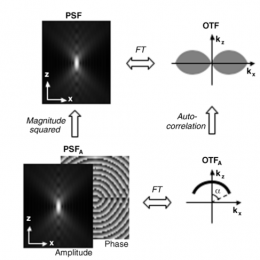
Microscopists are often adapting techniques pioneered for astronomy. Adaptive optics is the example you all probably know. Relatedly, phase retrieval was originally developed for telescopic imaging systems, and was adapted for high NA microscopic…


Open source intrinsic imaging

“>

Leonardo Lupori and Raffaele Mazziotti are two fellows in lab of the excellent Tommaso Pizzorusso. They have developed an intrinsic signal optical imaging rig and are sharing all of the materials. Here’s their web…


Upconversion: NIR in, vis out

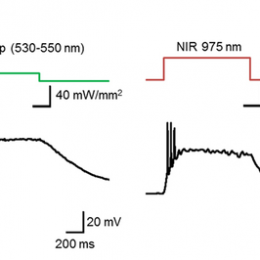
Compared to visible (vis) light, near infrared (NIR) wavelength scatters less and is less absorbed in brain tissue. If your fluorescent target absorbs vis light, then one way to use NIR is to flood the…


Coolant lines for lasers

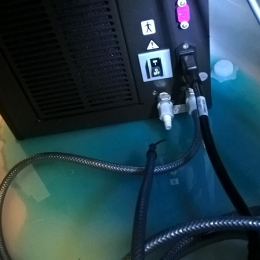
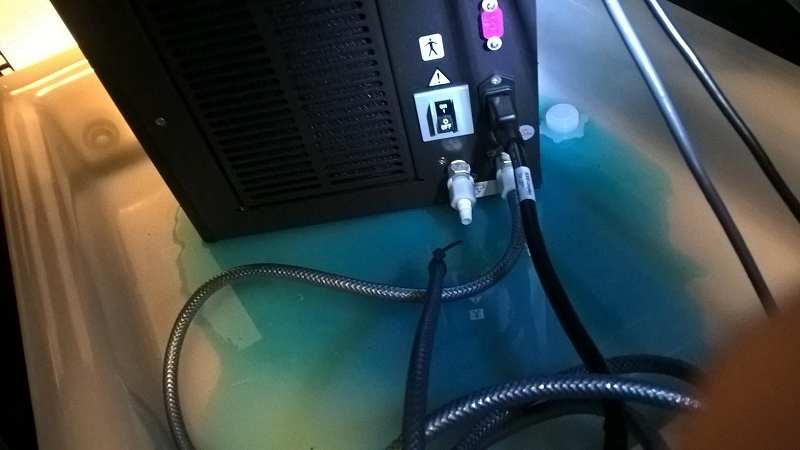
Many lasers have baseplates with channels through which chilled water is pumped to dissipate heat and stabilize the temperature of the system. I haven’t had much trouble with the chillers and baseplates of Newport/Spectra-Physics…


Intersectional strategies: CRE-DOG

Intersectional strategies are rapidly growing in sophistication. Unfortunately, it still takes time to generate mice and make crosses as needed, so short cuts are handy.

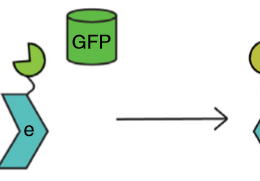
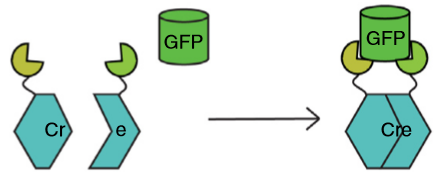
The CRE-DOG technique, from Connie Cepko’s lab, induces expression in…


Imaging Course at Max Planck Florida

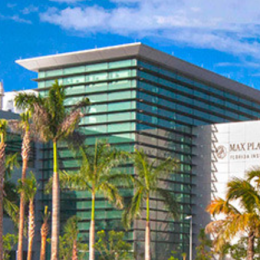
The Max Planck Florida Institute for Neuroscience is holding an imaging course Jan 11-20, 2016.
They have a really excellent line up of lecturers. A range of topics will be covered: two-photon imaging, FLIM, FRET, endoscopy, uncaging, optogenetics, SPIM, image analysis, instrumentation (alignment, system design), …

Applications are due in a few days, Nov….


Cute trick for spinning down tubes

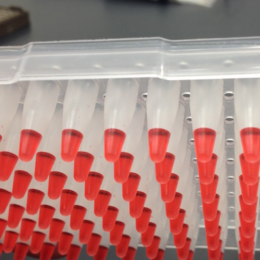
The web site is in Japanese, but the pictures and gif are self explanatory.