PMT power supply
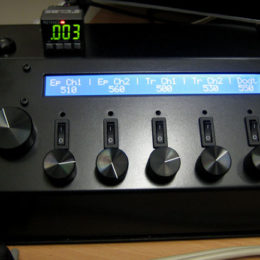
I was cleaning house a bit, and among my old files I found this, which might be worth sharing. Years ago I made a centralized power supply for a custom 2-photon imaging system I built. There were two…
I was cleaning house a bit, and among my old files I found this, which might be worth sharing. Years ago I made a centralized power supply for a custom 2-photon imaging system I built. There were two…
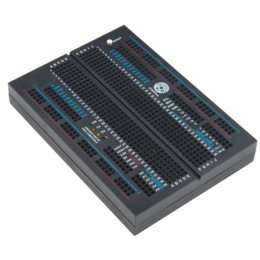
It’s a microcontroller built into a breadboard. Actually, TWO microcontrollers. Both are Arduino-compatible. ATmega16U2 and ATmega328P.
It comes in both black, white, and pink because style matters.
P.S. The bottom side is…
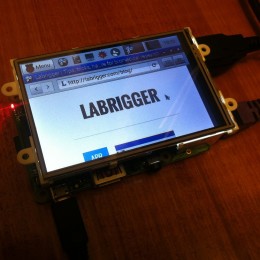
Labrigger has been experimenting with Raspberry Pis. We still find a lot of uses for Arduinos for little jobs around experimental rigs. Their simplicity and predictable performance (no background processes) make them easy to implement…
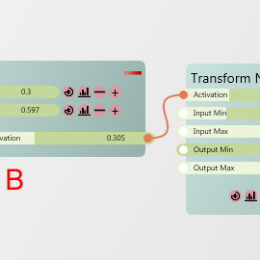
Embrio isn’t completely open. They want to sell $50 licenses. Let’s get that out of the way first. However, it is an interesting alternative for programming Arduino hardware. It’s a visual programming environment, like…
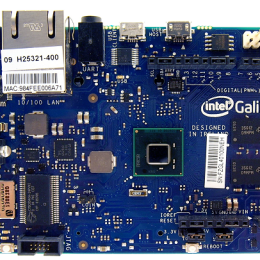
The Intel Galileo is an interesting mashup. It’s Arduino compatible. You can hand it to an undergrad and they can download the Arduino IDE and program it on their own with relatively little training….

Our friend Christian Wilms tipped us to Austin Blanco’s blog, which has some posts you all might be interested in:
Characterizing unknown optical components
A few notes on Arduinos, their timers, and using…
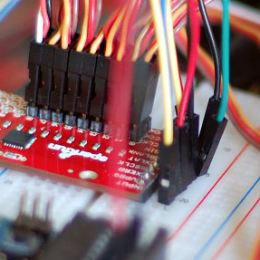
A friend just asked a quick question: How can I make a bunch of cheap (not fast) laser shutters? Here’s a quick answer: For motors, servos are pretty easy to use. Put a piece…

One of the first posts in this blog was on Processing. Processing is a programming language with an integrated development environment that is specialized for simplicity– ease of learning and…
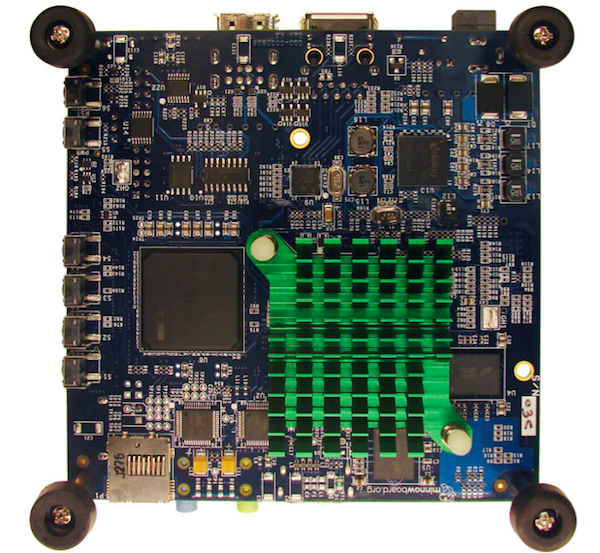
About a year ago Labrigger covered the Raspberry Pi, a single board computer. In some ways, it’s like a high-powered Arduino, but really, it’s a miniature PC. Albeit, a PC that uses an…
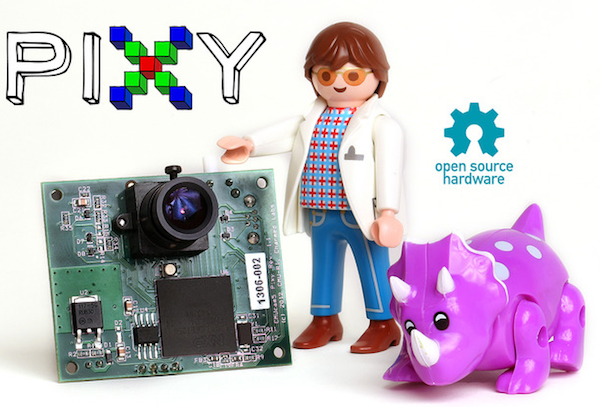
Carnegie Mellon is a magical place for robotics, and their CMUcam, an open source hardware project for machine vision, has recently culminated in Pixy. This is a wildly funded Kickstarter project (funded…
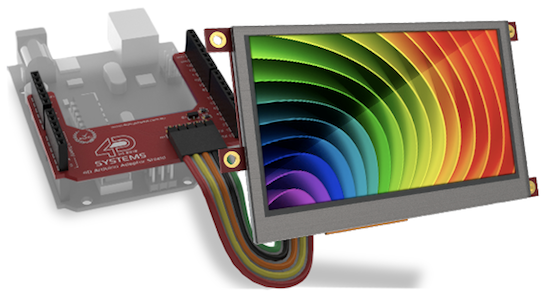
4D Systems sells screens and touchscreens for Arduino, Raspberry Pi, and other systems. Importantly, the code is portable (mentioned in the video above), they have good support, and the hardware plugs right into the boards. It doesn’t get much easier than this. They have resellers…
The Open Hardware wave keeps rolling: MySpectral recently announced the Spectrino – an Arduino based spectrometer. It’s as barebones as spectrometers go, with the small enclosure containing a diffraction grating, CCD light…