Posts tagged with optics

If you’re like most people, you can get the vast majority of your holiday shopping done at Edmund Optics. They’re having a Cyber Monday sale this Monday, November 26th. Use code Cyber12 at checkout.

Here’s the deal, they’re offering 50% off of these product families: Clearance, Recertified, Anchor

The first two categories are self explanatory, but the third is an interesting product group so it’s worth a post to highlight it.

The anchor products (optics, mostly) come in different grades.
Commercial grade = meets stated spec
Experimental grade = up to 10% off stated spec

Grade 1: Normal, high quality product. Edged.
Grade 2: Chipped, stained, or otherwise slightly messed up. Not edged.

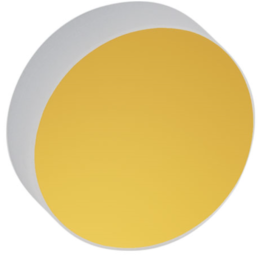
They’re already pretty cheap, so you can pick up a lot of optical elements for not much cash all in one go (e.g., protected gold 1″ diameter mirrors, $17.50 at Edmund’s Anchor section (and just $8.75 after the 50% discount), or $55.00 at Thorlabs). They’re not the highest spec stuff, but they’re not bad, and often the performance will be limited elsewhere in the system anyways. Grab some cheap items and mock something new up.

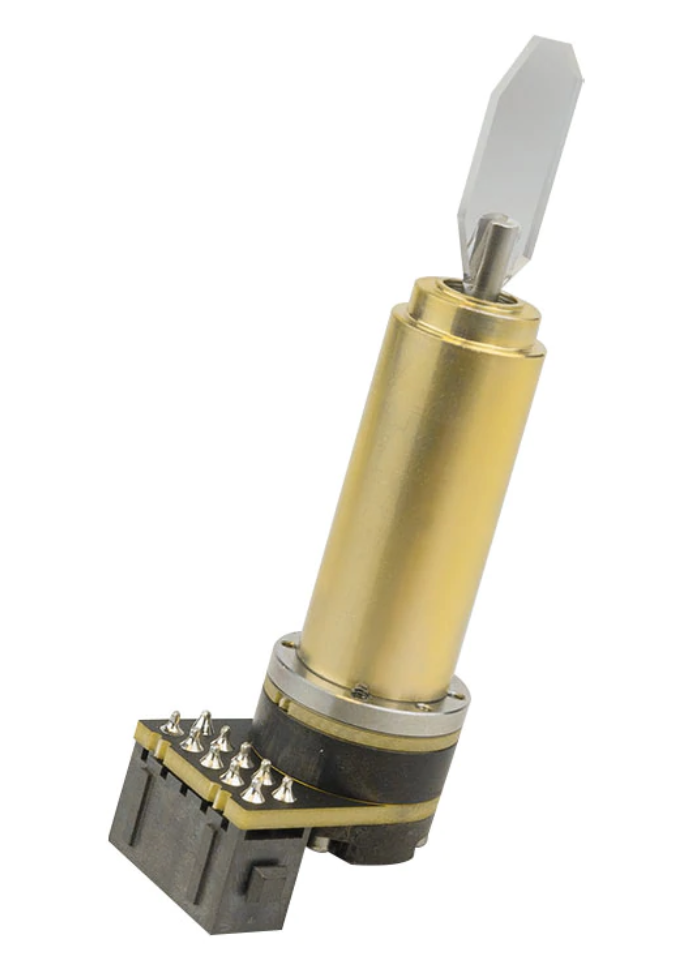
With its newly introduced scan head, Scientifica’s 2p scope is finally a complete package. They’re happy to sell their modular design in pieces, so this fills the void between fully custom rigs and turnkey systems.

The scan head uses a relay lens system (a.k.a., a 1:1 telescope) between the x- and y- galvo mirrors. Most scopes opt to simply put the x- and y- galvo mirrors as close to each other as possible. The inclusion of a relay system is an interesting choice. Although not unheard of in 2p scopes or laser scanning scopes in general, I suspect they might become very popular for some fields of research. Here’s why…

Read the rest of this entry »

This isn’t an overhead view of the table, they just built the whole thing on a vertically-mounted breadboard. Cool. (link)

Drosophila embryos are a fraction of a square mm, and go from fertilization to hatching (as a larva) in about 22 hrs. So it’s possible to image individual embryos in their entirety with minute or sub-minute level temporal resolution (each 3D snapshot takes about 30-500 seconds, depending on method and resolution).

A couple of papers exploring whole embryo imaging appear in the latest Nature Methods. The accompanying N&V does a nice job of summarizing the different approaches. Check out some of the movies. They’re spectacular.

The Open Hardware wave keeps rolling: MySpectral recently announced the Spectrino – an Arduino based spectrometer. It’s as barebones as spectrometers go, with the small enclosure containing a diffraction grating, CCD light sensor and an Arduino. Hooked up to a computer (PC, Mac, Linux) via a USB cable it is controlled and readout by a Processing based simple spectroscopy application. Given the open design, users will be able to adapt this or build their own applications for read out and analysis tailored exactly to their needs.

Obviously the Spectrino won’t be able to compete with OceanOptics or Oriel USB spectrometers in terms of speed or resolution (we’re talking 2 to 4 nm at 8-bit pixel depth here). But given at least my standard applications (Which LED was this? Which filter was that?), it’s an ideal addition to the lab bench. Especially given the expected significantly lower price tag.

Information is still a bit scarce and at the moment they only have a pre-order program running, but the idea is straight forward and they are already preparing to send a Spectrino into orbit, so we have good reasons to assume this is beyond vaporware.

Post by Christian Wilms.

1 comments

Cage systems

Cage systems, like optical rails, are platforms for constructing custom optical systems.

Thorlabs’ 16 mm, 30 mm, and 60 mm cage systems are well known (shown above). The numbers refer to the on-center square spacing of the four 6 mm rods that form the backbone of the cages (4 mm rods in the case of the 16 mm cage system). There are some lesser-known cage systems as well.

Edmund Optics

Edmund Optics recently launched a line of cage system optomechanics. Many of the pieces may fit (or fit with minimal modification) items in the Thorlabs system since they also use 6 mm rods. More broadly, Edmund Optics actually has an excellent line of optomechanics that includes a lot of products that go beyond what Thorlabs offers. For example, these z-axis brackets.

Newport

Here is Newport’s impenetrable cage system. Personally, I think it was a brave choice to hire M.C. Escher as an optomechanical engineer.

Qioptiq

Formerly known as the infinitely more pronounceable Linos, their Microbench and Nanobench lines are excellent. On paper, they should be compatible with Thorlabs 30 mm and 16 mm cage systems, respectively, but in practice I find that there often needs to be just a little bit of modification– e.g., widening holes slightly. Maybe this is due to English-to-metric round-off errors, or different tolerances.

Others

CVI Melles Griot and Siskiyou both have excellent lines of optomechanics, but no cage systems as far as I can tell.

Elsewhere on Labrigger:
Alternative Optomechanics

The main factor that limits how deep we can image into tissue is the scattering of light. Multiphoton imaging partially mitigates the problem by using infrared light, which scatter less, and by using an excitation process that drops off nonlinearly with intensity. However, it only partially mitigates the problem. Light scattering is still the main factor limiting how deep we can image.

If scattering is such a problem, why not address it directly? Scattering is due to mismatches in the index of refraction at the borders of structures. In biology, this is typically between lipid membranes and aqueous intracellular and extracellular fluids. If the aqueous solution is replaced by something with the same index of refraction as the lipid membranes (or the lipid membranes are replaced), then there should be less scattering and we should be able to image much deeper.

Well, this idea has been around for quite some time. Dating back to the 1950s.

Recently, there has been somewhat of a rediscovery of the technique. Starting with a paper from Dodt in 2007, a paper from Miyawaki’s lab in 2011 (the Scale paper), and then another paper from Dodt this year. There has been some criticism that the earlier work didn’t get cited much by the recent papers.

Importantly, microscope manufacturers have started releasing objectives specifically for cleared tissue. These objectives offer a unique combination of low magnification, high numeric aperature, very long working distances, and are designed for the refractive index of the clearing agents. (e.g., Olympus, Zeiss)

Next time you’re explaining TIRF to someone, start off by showing them this piece of artwork. (Arndt von Scheidt, source)

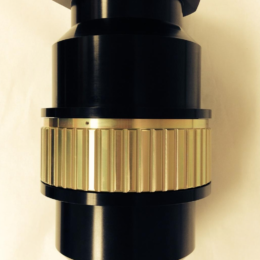
Fun fact for the day: ThorLabs’ SM2 lens tube standard screws right onto the front end of Nikon’s SLR lenses. Other manufacturers probably use the same threading, I just haven’t tried them.

I don’t know if this is by design or not, but it makes coupling 35mm SLR lenses into optical setups fairly straightforward. I’m using it for a tandem lens macroscope. In the picture above I used ThorLabs part SM3A2. BTW, they also sell some F-mount adapters for connecting to the other side of the lens.

This is a long post. If you’re in a rush, then just read these first two paragraphs.

One of the early posts on this blog was about structured illumination. Specifically, I spoke about Mats Gustafsson’s version, which yields superresolution imaging, in the wide-field mode. Just recently, JM commented on that post and asked if there was any kind of guide on how to get this set up and running. Besides the usual sources (methods sections, co-authors, etc.), I’m not aware of any such guide. However, I have corresponded a few times with Mats over the years and he was always overwhelmingly helpful.

He passed away earlier this year and there have been a few articles written about his landmark work, his thoroughness, and his kindness (Nature Methods, HHMI). In this post, I want to share some excerpts from his emails to me. They’re not personal (we were just acquaintances), they’re technical. In addition to them being useful to people who may be putting together their own patterned illumination rig, I think they also give a small insight into how kind of a person Mats was. He took the time to write these detailed responses to just some postdoc that he met at a small conference.

Read the rest of this entry »