Posts tagged with dissemination

hg2

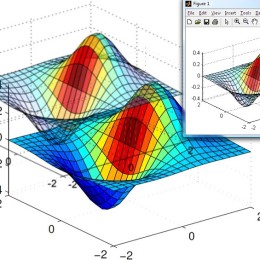
Undocumented MATLAB has an in depth look at the next generation graphics handler for MATLAB which you can use today, although it’s not officially released yet. Use the command line option “-hgVersion 2″ when launching MATLAB. See the post for more details.

feedly

Here’s a follow up on the previous post about alternatives to Google Reader (which is being shut down).

Patrick Mineault commented that Feedly is looking good. I agree. Basic functionality is smooth and somewhat intuitive; layout and design are excellent.

Read the rest of this entry »

bibliogo

Google Reader is going to be shut down on July 1.
If you use Reader, here’s what to do:

Step 1: Export all of your subscriptions from Google Reader
(takes less than 1 minute)

Try these directions. It’s easy.

Step 2: Start using an alternative, and import your old Google Reader stuff.
(can take as little as 2 minutes, once you decide on one)

I’m trying Bibliogo right now, and I like it so far. It’s geared towards academics, so it’s a good fit for the Labrigger audience. It opens webpages within the window in a nice way, making it fairly quick to flip back and forth between RSS entries and the actual webpages. Even Google Reader never did that very well.

But there are other alternatives.
WordPress has a Google Reader-like feature.
SmashingReader looks nice.
If you have your own server, you might like Fever or PrivateOSS.

1 comments

PubPeer Anonymous

You can now post comments on PubPeer completely anonymously. Not even a login is required.

PubPeer has always allowed anonymous comments, but it used to be that you had to log in, so the admins know who you are. Now you don’t even have to log in, so there’s no paper trail. Comments will be hand-reviewed, so they don’t post right away like other comments do. However, if a higher level of anonymity is required, this is the ticket.

Previously on Labrigger:
Post-publication peer review
PubPeer is taking off

UPDATE 1
Right now this doesn’t seem to be true. Although PubPeer sent around an email proclaiming a new feature: “No login required to leave comments”, a login dialog appears when clicking in a text box or trying to submit a comment.

UPDATE 2
PubPeer’s working on it. For the record, in the email PubPeer sent around about this new feature, it was listed as one of a list of features that “are implemented or on their way”.

PubPeer, a site for anonymous (or non-anonymous), post-publication peer review is taking off nicely. Traffic is increasing to the site and there are a lot of interesting comments, including both detailed commentary and brief observations. Some discussions are getting quite involved (over 15 comments).

Since the last time Labrigger mentioned PubPeer, they’ve added some nice features.
1: Recent comments. (pictured above) shows the most recent activity on the site.
2: Alerts. Users can choose to receive email alerts whenever someone comments on their favorite
papers.
3: Simplified author signup. Get to commenting easier.

There will probably always be a need for metrics like impact factor so that non-experts can estimate the significance of a scientist’s publications. These metrics are problematic, as we all know.

Interestingly, the relationship between an article’s citation rate and its journal’s impact factor is weakening. The saturation of the market by many specialty journals, along with their widespread online accessibility, has resulted in a lot of top papers going to smaller, low impact factor journals. This preprint has the details:

The weakening relationship between the Impact Factor and papers’ citations in the digital age
George A. Lozano, Vincent Lariviere, Yves Gingras

Will this trend continue?
(source, arXiv)

Figshare is an online database for storing figures, data, and papers. It’s been around for a while, but recently its really been taking off.

–You can post images, or entire paper PDFs. Also datasets.

–It’s citable. Useful for negative data?

–It’s free.

–If you want to keep it private, the limit is 1 GB. If you leave it public, there is no storage limit.

Post publication peer review has yet to really take off, but Labrigger hopes it does. One of the newest sites is PubPeer.

PubPeer does it right, allowing for anonymity. This is important in order to obtain candid opinions from the scientific community. The bland and boring reviews at F1000 show what comes out when anonymity is not allowed.

An addition benefit is an increased quantity of participation: compare the content on Wikipedia and Scholarpedia. The latter has non-anonymous authorship, and although the articles are high quality, the quantity is very poor compared to Wikipedia. Anonymity lowers the threshold for making casual additions to online resources.

PubPeer is not a free-for-all, however, it is trying to keep the comments constructive by only allowing authors of papers to create accounts and comment.

A similar effort, The Third Reviewer, seems to have been abandoned. I get the impression that the PubPeer platform is a bit better automated than The Third Reviewer, so perhaps it has more staying power.

One concern is that anonymity will mean the comments will be dominated by cranks and disgruntled colleagues, and might even devolve to the level of YouTube comments. However, as evidence to the contrary, the comments on the short-lived Third Reviewer site were all fairly constructive and generally positive, even when pointing out technical flaws or other issues (examples 1, 2, and 3).

Hubbian is an alternative interface for browsing the abstracts for the upcoming Society for Neuroscience meeting. It tracks abstracts views and has an interface for comments and voting. It’s a product of four members of the Josselyn/Frankland lab. (link)

4 comments

Fraud

New analysis in PNAS is used to support several new conclusions:

  • Fraud is increasing. “The percentage of scientific articles retracted because of fraud has increased [about] 10-fold since 1975.”
  • “…for articles in which the reason for retraction is known, three-quarters were retracted because of misconduct or suspected misconduct”
  • Duplicate publications and plagiarism are largely restricted to journals with lower impact factors (< 5) compared to errors and fraud. Perhaps this is a strategic decision by plagiarists.
  • My faith in the rigor of the authors’ analysis is shaken by their use of 3D, angled pie graphs (Fig. 2)– but I’ll try not to throw the baby out with the bathwater. Speaking of that Fig. 2, it might be interesting to divide by the total scientific output of each country, to see if the proportion of fraudulent papers varies significantly by country.

    Also, apparently retractions don’t always staunch the flow of citations…

    Interestingly, according to their data, most fraudulent papers from about 1985-2000 were from serial offenders– authors with 5 or more fraudulent papers in total. Even today, these serial offenders account for a lot of the fraud.